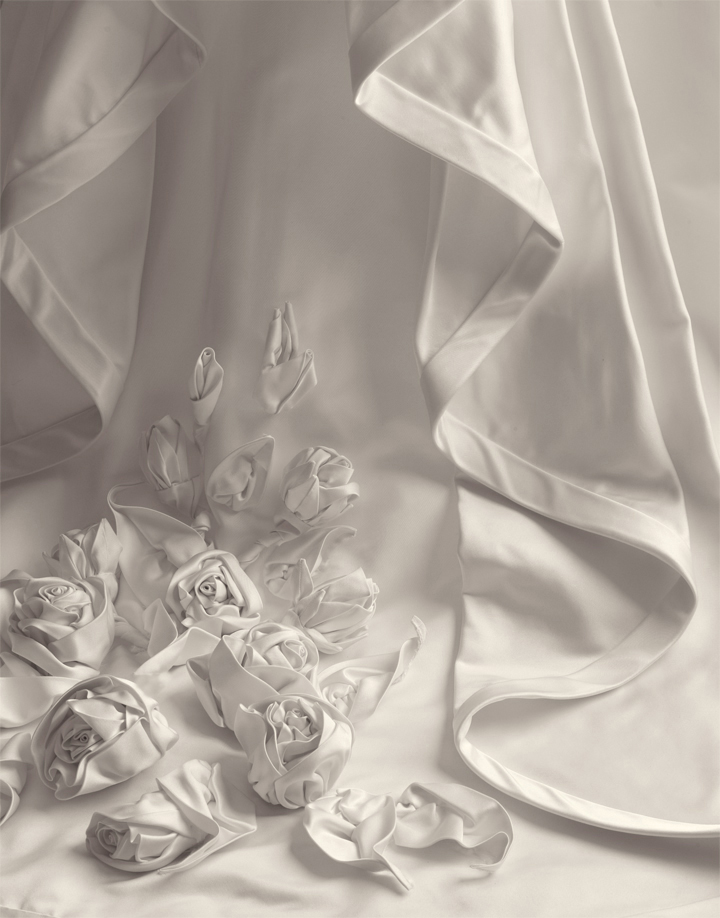
…From the train on the back of the Victorian Gown.
Happy Valentines Day to all of my brides, past, present and future! May your lives be filled with love and happiness!
Best Wishes,
Colette
A blog I had originally intended to document all my creative projects in, but it causes me too much anxiety, so I never do.
…From the train on the back of the Victorian Gown.
Happy Valentines Day to all of my brides, past, present and future! May your lives be filled with love and happiness!
Best Wishes,
Colette

Something that I think is critically important in determining what a bride is going to look best in is to know what her groom looks like and what the two of them look like together. Weddings have become so bride-centric that the groom is often overlooked, but this day is just as much about him as you. It is about the two of you becoming one, and you should choose garments that visually reinforce that idea.
When I design a gown for a bride, finding out about her fiance is one of the first things I do. How can I make something for this bride that will not only look beautiful on her but also be complementary to her husband and make him look his best?
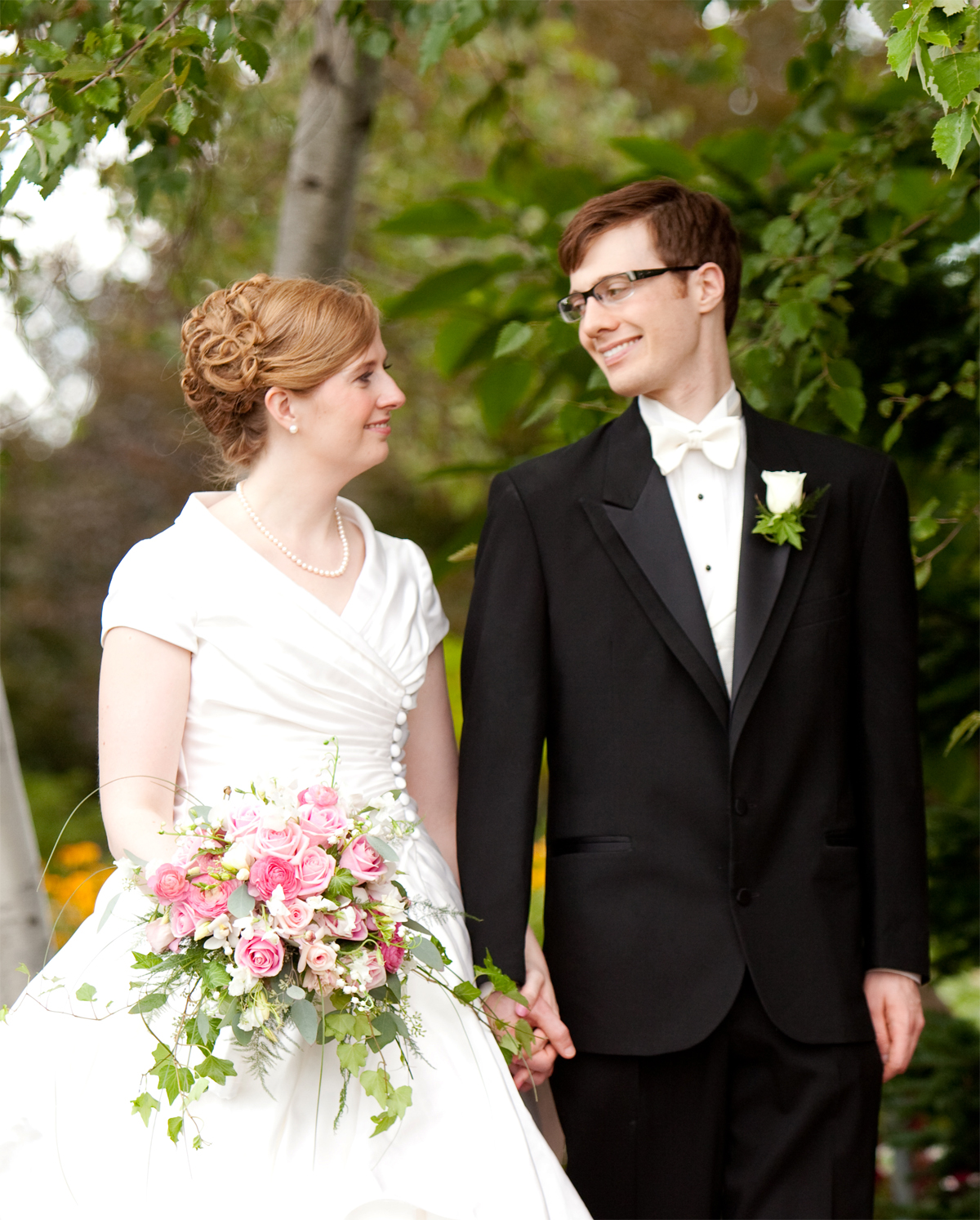
Remember that the most important pictures you will look back on from you wedding are the ones of you and your husband together and you don’t want your dress (or your hair or makeup, for that matter) to draw unnecessary attention to itself, or overpower your husband. (Think about all the wedding photos from the 1980’s — how many brides regret the lacy beaded pouffy shiny satin sleeves?!)

This is what the Victorian Gown, currently featured in Martha Stewart Weddings, looks like on a real bride!
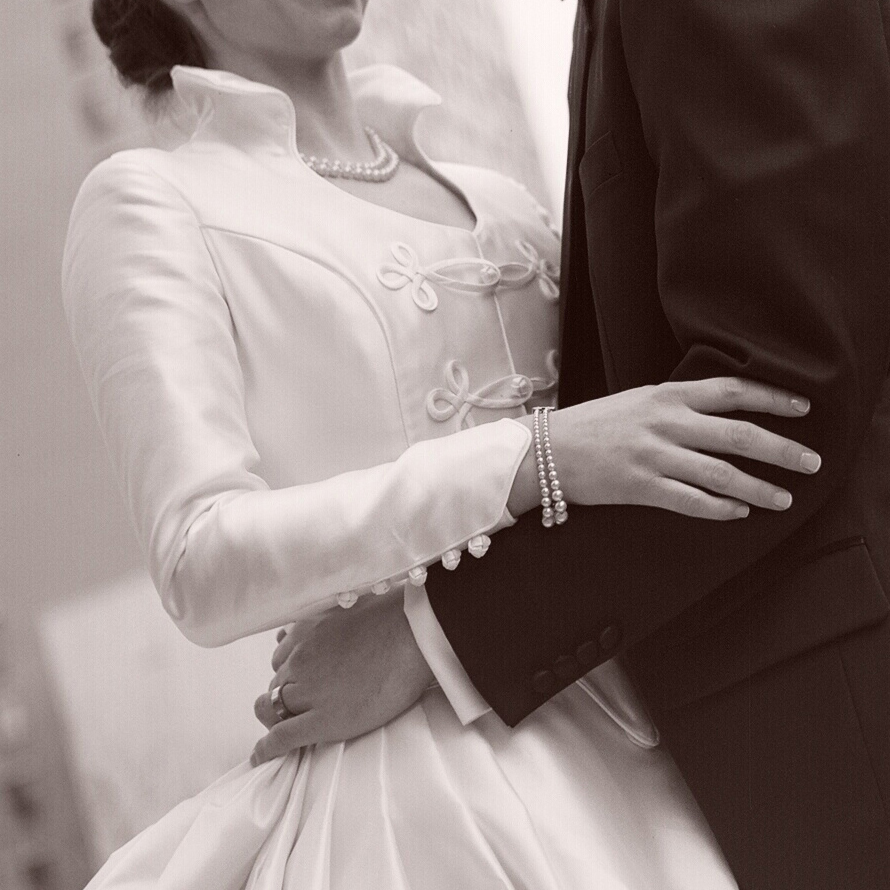
This bride wanted the Princess Dress, but was getting married in December in New York, so I made it with long sleeves. I think I like it even better this way, with the Chinese ball button closure at the sleeve vent.

I’m obsessed with how the fabric looks in this photo. It’s a gorgeous Italian silk double-faced duchesse satin that I specifically chose for its luster, which perfectly accentuates all the gathering on the bodice.
“In a machine age, dressmaking is one of the last refuges of the human, the personal, the inimitable. In an epoch as sombre as ours, luxury must be defended inch by inch.” — Christian Dior, 1957
As found in one of my favorite books, Couture and Commerce, by Alexandra Palmer.
“The classic way to design a dress is to work on it on a live mannequin. A sketch is only the ignition of your inspiration, but the dress takes its true shape when made on the human form. I learned this cardinal rule from Molyneux, who saved me from architecture and gave me my start in the fashion world. I also learned from him never to add anything to a dress during a fitting. Always simplify — that’s the rule.” — Pierre Balmain
From the May 1980 Playbill article, Balmain on Broadway, a segment of which was on display at On Stage in Fashion exhibit that I visited yesterday. I went back today with a pen and paper to copy down this quotation because I couldn’t stop thinking about how true a statement it is.
I just caught the exhibit On Stage in Fashion in the nick of time because it closes tomorrow. I’m so glad I got to see it! I’ve always loved the performing arts — especially opera — because of the elaborate costumes. (I even considered becoming a costumer for a while; the summer between my junior and senior years at Parsons I did an apprenticeship as a costume stitcher at the Santa Fe Opera.)
There were some gowns by Callot Soeurs that I thought were extraordinary, and there was a bias cut chiffon ballet costume that had no side seams which fascinated me; I wish it hadn’t been right up against a wall so I could see how it was constructed in the back. While there weren’t as many opera costumes as I was hoping, there were a lot of really amazing archival costume sketches and photos from obscure but beautiful 20th century plays and productions.
It closes tomorrow but I overheard one of the docents mention to a group of students that it will be open on Tuesday…Go if you can!

I had a client whose husband had a custom tuxedo tailored for him to wear on their wedding day. I provided his tailor with an extra yard of the silk peau d’ange I was using to make his bride’s gown so that it could be made into a tie that matched. It was a beautiful detail that brought the bride and groom together visually, and metaphorically — each of them wearing something “cut from the same cloth,” as it were, to symbolize their union.
Of course, I would only recommend doing this if the wedding gown is made in a tightly woven fabric that would befit a tie or vest, such as duchess satin, peau d’ange, or possibly some taffetas. In any case, you should make sure that the whites your groom wears match the white of your dress as there are many shades of white, off-white and cream.
Well, it’s the first day of July which means it’s exactly halfway through the year — a very significant day for me because I am kind of obsessed with balance and symmetry. It’s like center front on a dress, a straight shot down the middle delineating one half from the other. “CF” is the first line you draw on dotted paper when you draft a dress pattern, and it’s the first place you pin the muslin when you drape on a mannequin (unless you are making something seriously asymmetrical, but I don’t want to get too technical here, and/or spoil my analogy). So I have chosen today to start this blog — the “center front,” if you will, of 2010.
Ever since Martha Stewart Weddings featured my Petal Gown in its Winter 2010 issue, I have gotten emails and phone calls from people all over the world asking where can they get my gowns, and what stores carry my line. I always have to answer that my gowns are only available from my studio in New York, that I make everything by hand specifically to fit each client, that the process requires x number of fittings, and that everything is custom. But there’s so much more to it than that. And that’s what I’m hoping you’ll take away from reading my blog — Colette Komm and her dresses really are everything she seams…
 Everything She Seams...